Best Sounds for Focus and Productivity: Science, Types & How to Use Them
Staying focused has become increasingly difficult in modern work and study environments. Open offices, remote meetings, city noise, and constant notifications all compete for your attention. Even when motivation is high, external distractions can make deep focus hard to sustain.
This is why many people turn to background sounds—white noise, nature sounds, or instrumental music—to support concentration and productivity. But do these sounds actually help? And if so, which types work best, and how should they be used?
This guide explains how sound influences focus and productivity, the science behind different sound types, and practical ways to use them effectively in real-world situations.
Why Sound Can Improve Focus and Productivity
Focus is not only a matter of willpower. It is heavily influenced by the environment.
One of the biggest challenges to concentration is unpredictable noise. Sudden conversations, keyboard clicks, or traffic sounds constantly pull attention away from tasks. Even when these sounds don't fully break concentration, they increase cognitive effort and mental fatigue.
Sound can help by creating a more controlled auditory environment. When used correctly, background sounds reduce the contrast between silence and disruptive noise, making it easier for the brain to maintain attention over longer periods.
How the Brain Responds to Sound During Focus
Auditory Masking and Reduced Distraction
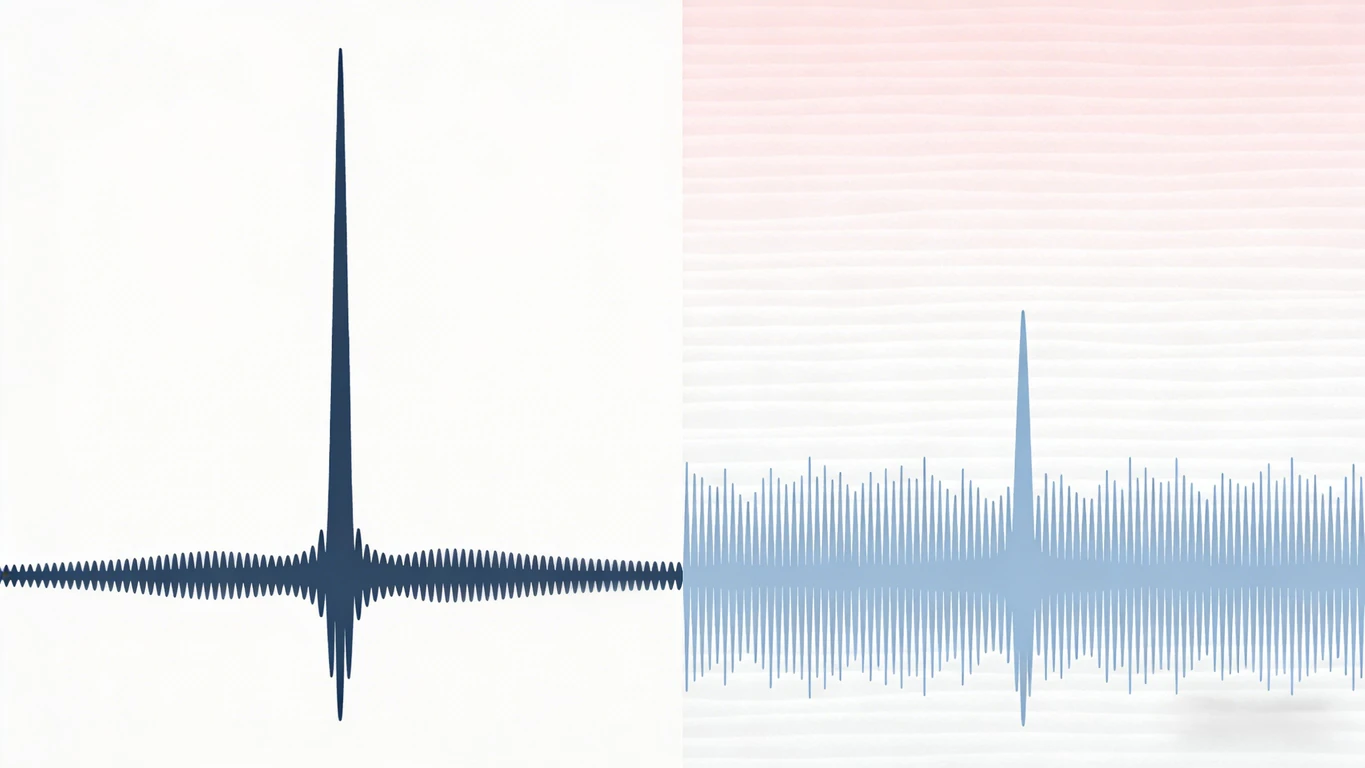
The brain is highly sensitive to changes in sound rather than constant noise. This is where auditory masking plays an important role.
A steady background sound raises the baseline level of noise, which reduces how noticeable sudden sounds feel. Instead of eliminating distractions entirely, background sound lowers their disruptive impact.
Predictability vs. Informational Load
Not all sounds affect focus in the same way.
Sounds that are predictable and low in information are easier for the brain to ignore. In contrast, sounds that contain language, meaning, or frequent variation demand attention.
Music with lyrics is a common example. Words naturally compete with reading, writing, and problem-solving tasks for cognitive resources.
Types of Sounds That Help You Focus
Different sounds support focus through different mechanisms.
White, Pink, and Brown Noise
Noise-based sounds are often used to mask environmental distractions.
- White noise is bright and evenly distributed across frequencies
- Pink noise emphasizes lower frequencies and feels smoother
- Brown noise is deeper and more low-frequency focused
These sounds are most effective in noisy environments, but individual responses vary.
For a deeper comparison, see our article: White Noise for Focus: Does It Really Work?
Nature Sounds for Focus
Nature sounds such as rain, ocean waves, or forest ambience tend to support focus by promoting emotional calm rather than strong masking.
They are often suitable for less demanding tasks or longer focus sessions where comfort matters more than noise suppression.
Music for Focus (Instrumental and Ambient)
Instrumental or ambient music without lyrics is generally less distracting than vocal music.
Slow tempo, repetition, and minimal variation help keep informational load low, making music easier to tolerate during focused work.
White Noise for Focus: When and Why It Works
White noise can be especially useful in environments with frequent, unpredictable noise, such as open offices or cafés.
However, it does not work equally well for everyone. Comfort and personal sensitivity play a major role.
Learn more in our dedicated guide: White Noise for Focus: Does It Really Work?
Music vs. Noise: Which Is Better for Productivity?
Noise and music support productivity in different ways.
Noise tends to provide stronger masking and remains emotionally neutral. Music can support mood and motivation but carries a higher risk of distraction, especially when lyrics are present.
For a full comparison, read: Music vs Noise for Productivity
Best Practices: How to Use Sounds for Focus
- Keep volume at a comfortable, moderate level
- Use continuous sounds without abrupt changes
- Match sound type to task difficulty
- Avoid frequent switching
Consistency is more important than intensity.
Common Mistakes That Reduce Focus
- Using music with lyrics for language-heavy tasks
- Playing sounds too loudly
- Frequently changing playlists or sound types
These habits increase cognitive load and reduce sustained focus.
Finding the Right Focus Sound for You
There is no universal best sound for focus.
Experiment with different sounds—noise, nature, or instrumental music—and adjust volume and timing until you find what supports your concentration most effectively.