How White Noise Improves Sleep: Science, Benefits & Best Practices
Falling asleep—and staying asleep—is harder than it should be for many people. Even when you feel tired, small sounds such as traffic noise, a neighbor moving around, or a sudden door slam can interrupt your sleep or prevent you from drifting off in the first place.
This is why white noise and other sleep sounds have become increasingly popular. But how do they actually work? Are they supported by science? And how do white noise, nature sounds, and gentle music differ when it comes to improving sleep?
This guide explains how white noise improves sleep, the science behind sleep sounds, and best practices for using them safely and effectively.
Why Noise Disrupts Sleep in the First Place
Sleep is not a simple on–off state. Even during deep sleep, your brain continues to monitor the environment for potential threats.
Sudden and irregular sounds—such as a car horn, barking dog, or a door closing—are especially disruptive because they stand out sharply against a quiet background. These sounds may not fully wake you up, but they often cause micro-arousals: brief shifts to lighter stages of sleep that fragment your rest.
Over the course of a night, repeated micro-arousals can significantly reduce sleep quality, leaving you feeling tired even after many hours in bed.
What Is White Noise? (A Simple Explanation)
White noise is a type of sound that contains all audible frequencies at roughly equal intensity. To the human ear, it sounds like a steady "shhh," similar to radio static or a running fan.
The most important characteristics of white noise are that it is:
- Continuous
- Predictable
- Stable in volume
These qualities make white noise particularly useful for sleep. It does not demand attention, and it does not change suddenly in a way that alerts the brain.
White Noise and Sleep Sounds: What's the Difference?
White noise is often discussed on its own, but it is actually part of a broader category known as sleep sounds or background sounds for sleep.
Sleep sounds include:
- White, pink, and brown noise
- Nature sounds such as rain, ocean waves, or forest ambience
- Gentle, repetitive music such as piano or ambient soundscapes
All of these sounds aim to create a stable auditory environment that supports sleep. They differ mainly in how they feel and which pathways they use—noise masking, relaxation, or a combination of both.
The Science Behind White Noise and Better Sleep
Auditory Masking: How Background Sound Blocks Disruptions
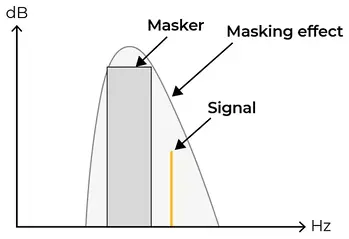
One of the main mechanisms behind white noise is auditory masking.
The brain is more sensitive to changes in sound than to steady noise. When the environment is very quiet, even a small sudden sound creates a strong contrast. White noise raises the baseline sound level, reducing the relative impact of sudden disturbances.
Importantly, white noise does not eliminate noise. Instead, it reduces how noticeable and disruptive those sounds feel.
Predictability and the Sleeping Brain
During sleep, the brain continues to evaluate sensory input. Sounds that are continuous and predictable are easier for the brain to classify as safe and ignore.
This is why steady rain, ocean waves, or consistent white noise are often less disruptive than irregular noises. Over time, the brain learns that these sounds do not signal danger and deprioritizes them during sleep.
Why Gentle Music and Nature Sounds Can Work Too
Not everyone finds white noise comfortable. For some people, natural sounds or gentle music are more effective.
Nature sounds combine mild masking with familiarity and emotional calm. Gentle music—especially instrumental or ambient music without lyrics—can promote relaxation and reduce pre-sleep tension.
Research suggests that relaxing music shows relatively consistent benefits for sleep quality, while noise-based interventions can be more dependent on individual sensitivity and environmental conditions.
Key Benefits of Using White Noise and Sleep Sounds
When used appropriately, white noise and other sleep sounds may offer several benefits:
- Fewer awakenings caused by sudden noises
- More stable sleep in noisy environments
- Easier transition into sleep for light sleepers
- Improved perceived sleep quality
These effects are not guaranteed for everyone, but many people find sleep sounds helpful when environmental noise is difficult to control.
Types of Sounds That Can Improve Sleep
White, Pink, and Brown Noise
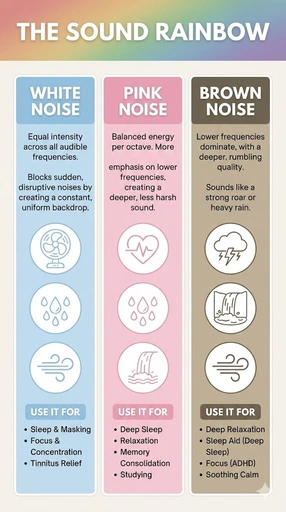
- White noise contains equal intensity across frequencies and sounds bright and hiss-like.
- Pink noise emphasizes lower frequencies and sounds smoother and softer.
- Brown noise has even stronger low-frequency emphasis and sounds deeper.
People who find white noise harsh often prefer pink or brown noise.
Nature Sounds (Rain, Ocean, Forest)
Nature sounds combine gentle masking with emotional comfort. Rain and ocean sounds are especially popular because they are repetitive and predictable.
These sounds are often a good option for people who dislike synthetic noise but still need background sound at night.
Gentle Music and Ambient Soundscapes

Sleep-friendly music is typically:
- Slow in tempo
- Repetitive
- Instrumental
- Low in volume
Simple piano pieces or ambient soundscapes work best. Lyrics and sudden changes should be avoided.
Best Practices: How to Use White Noise for Sleep
To get the most benefit from white noise or sleep sounds:
- Keep the volume comfortable and non-intrusive
- Use continuous playback rather than abrupt timers
- Place speakers away from direct ear contact
- Allow a few nights for your brain to adapt
Consistency is more important than finding a "perfect" sound immediately.
Is It Safe to Sleep with White Noise Every Night?
For most people, white noise and sleep sounds are considered low risk when used responsibly.
Basic safety guidelines include:
- Avoid high volumes
- Use speakers rather than earbuds overnight
- Take breaks if you notice discomfort
As with any sleep aid, moderation and awareness are important.
Finding the Right Sleep Sound for You
There is no single best sound for sleep. The right choice depends on your environment, sensitivity, and personal preference.
Experiment with different options—white noise, rain, ocean sounds, or gentle music—and adjust volume and timing until you find what works best for you.